
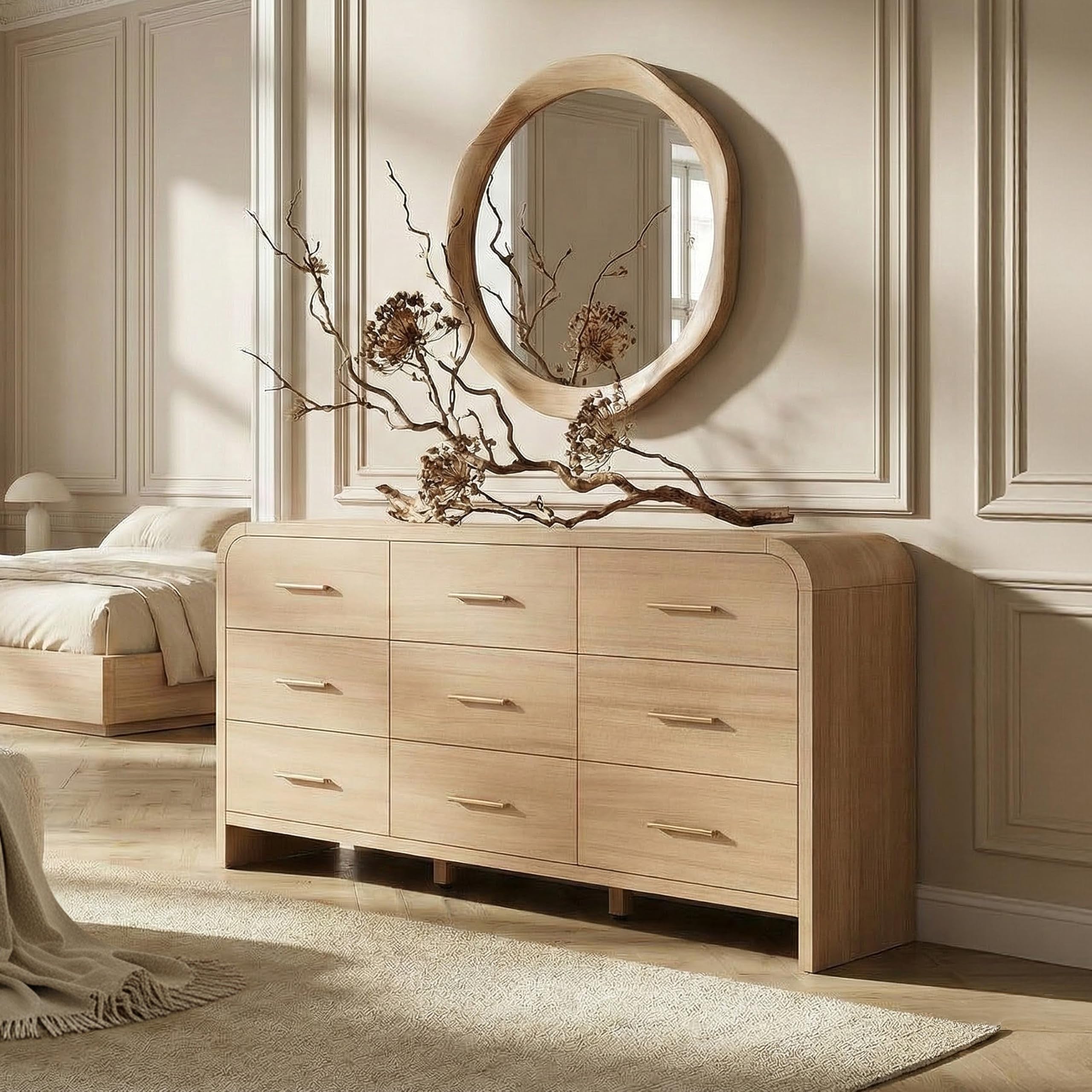
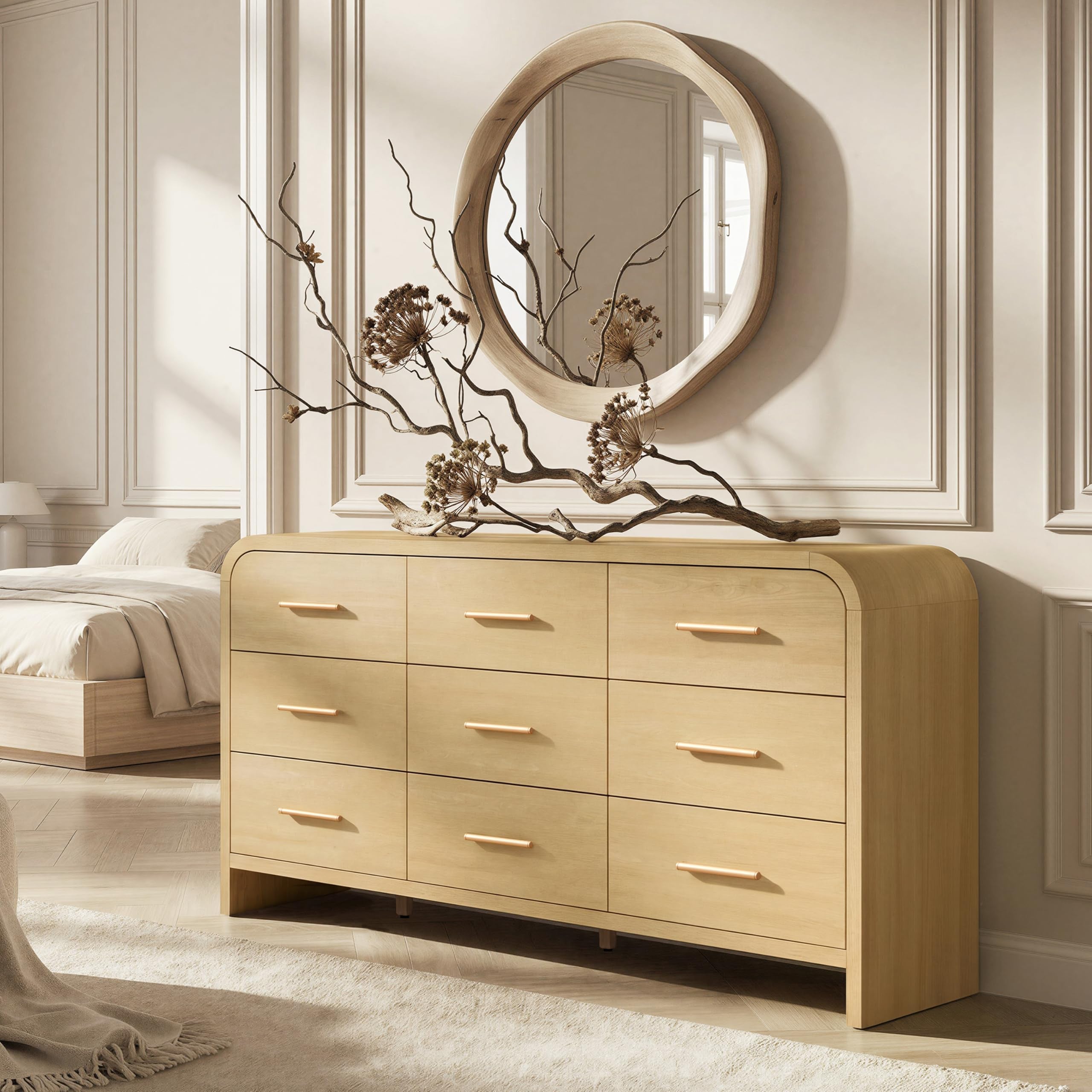
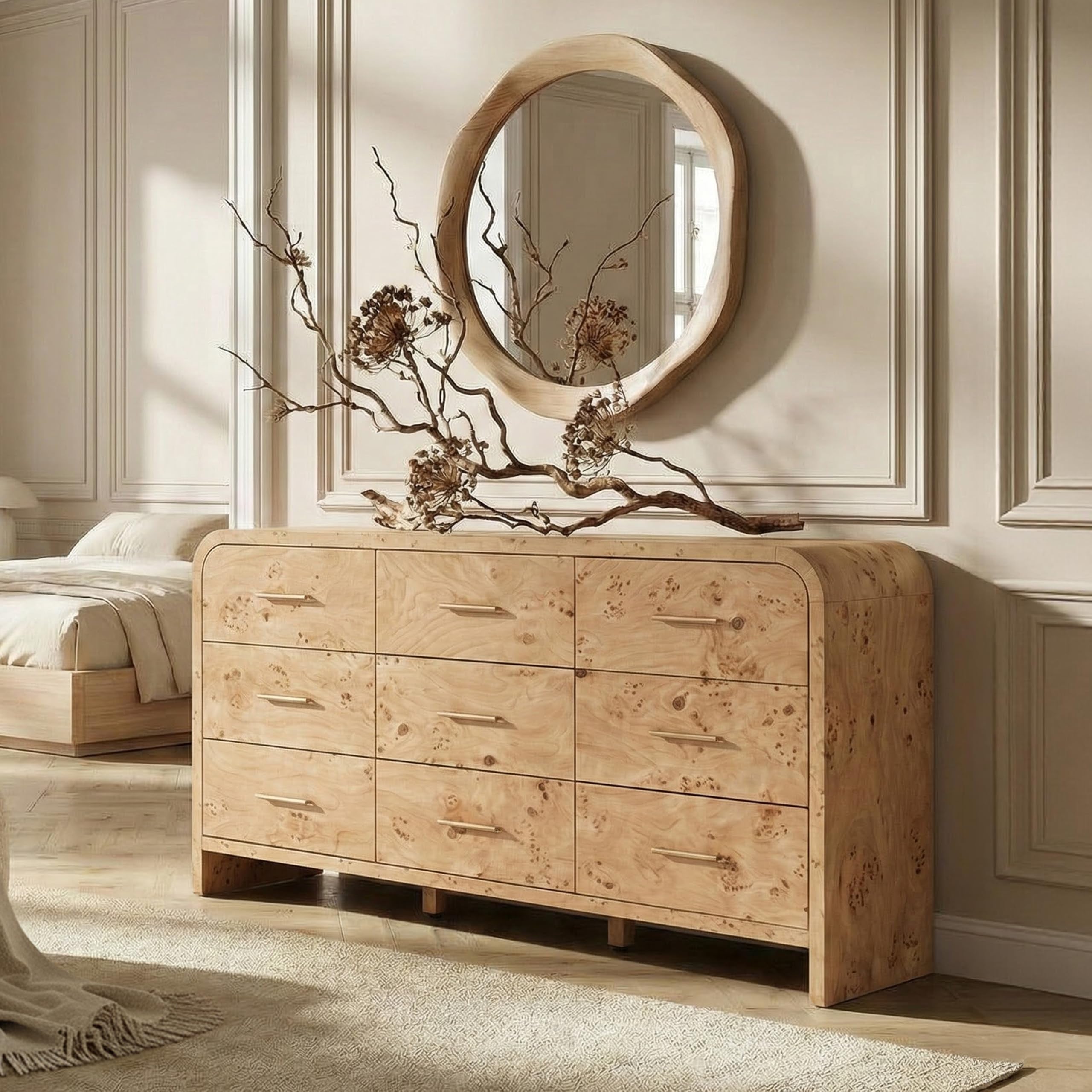
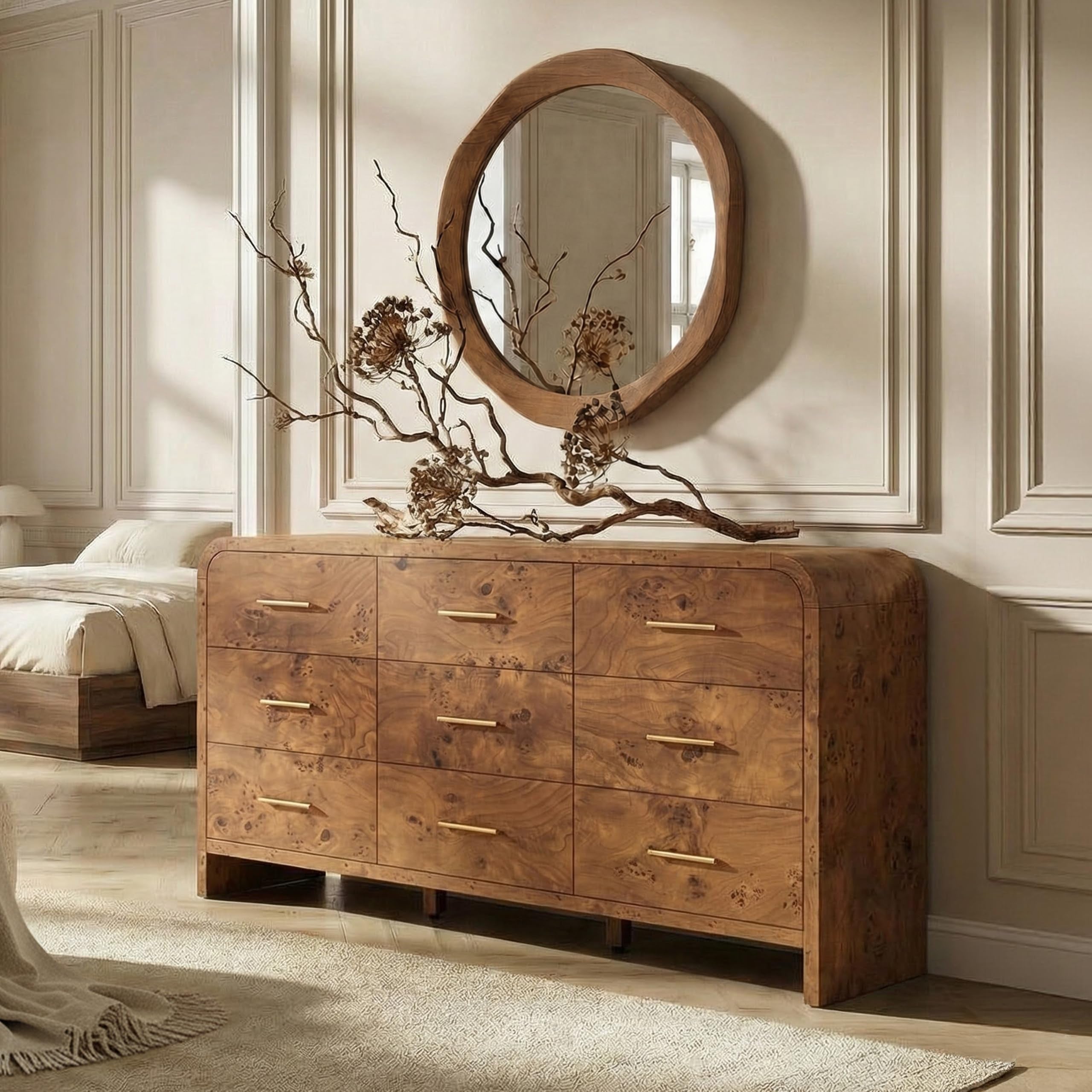
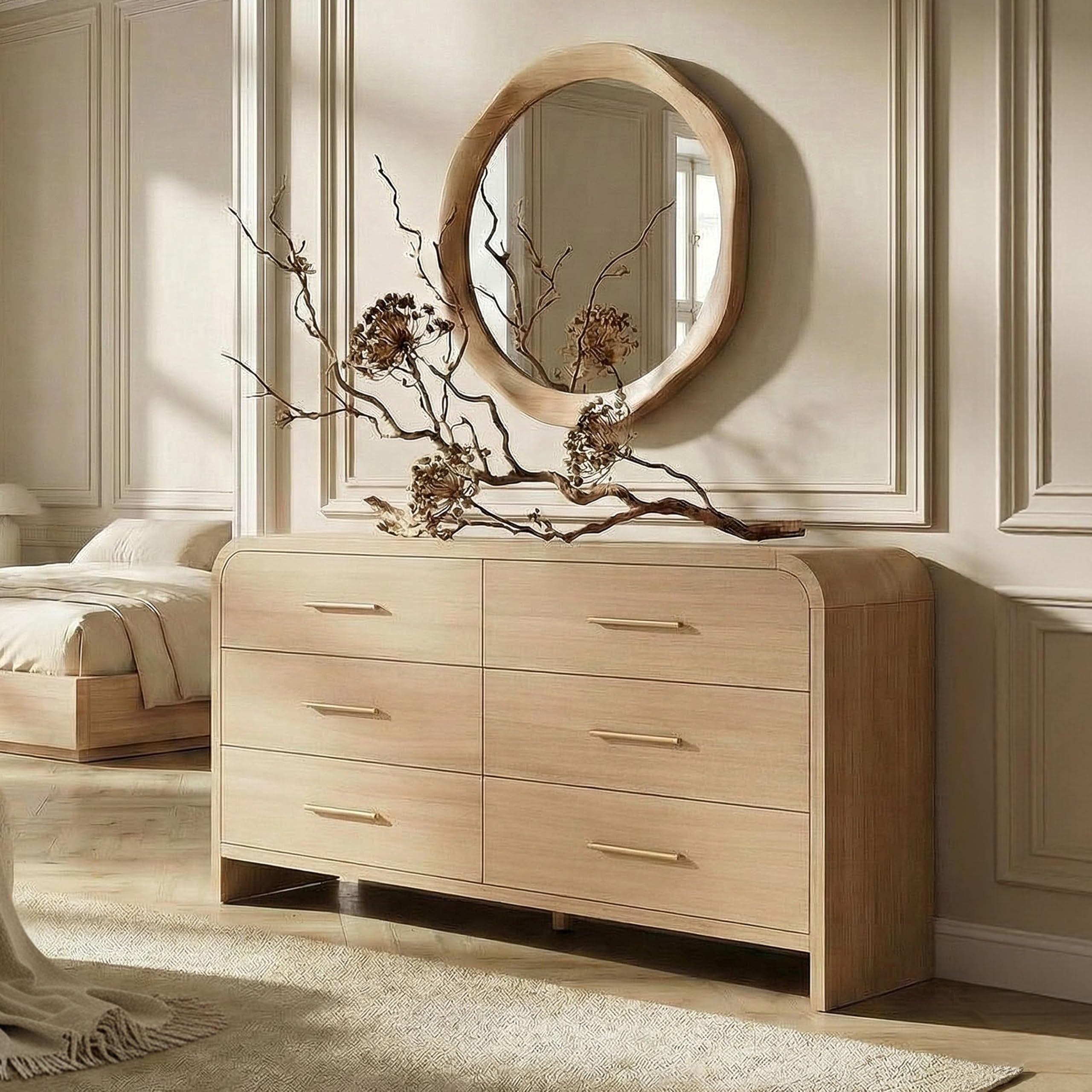
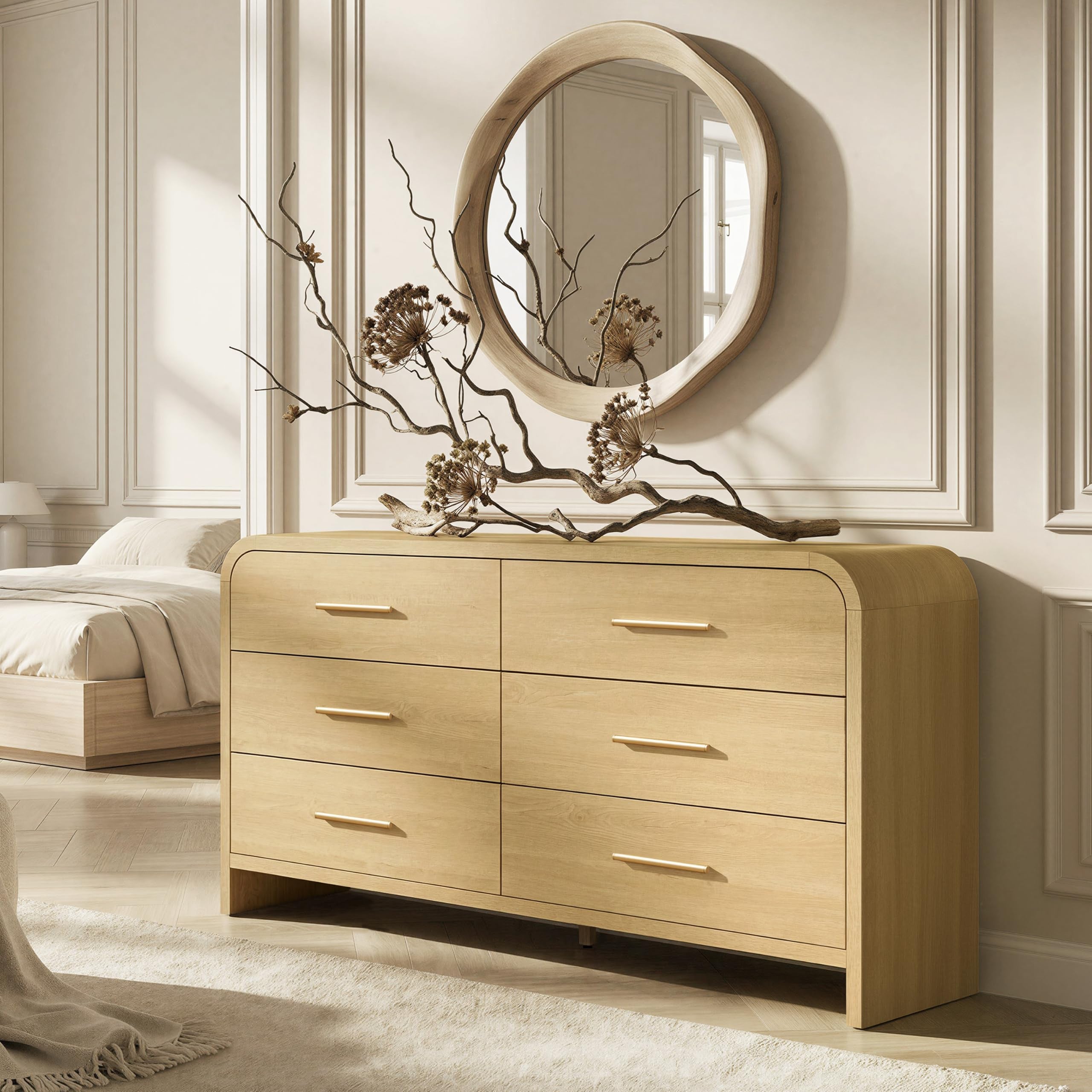
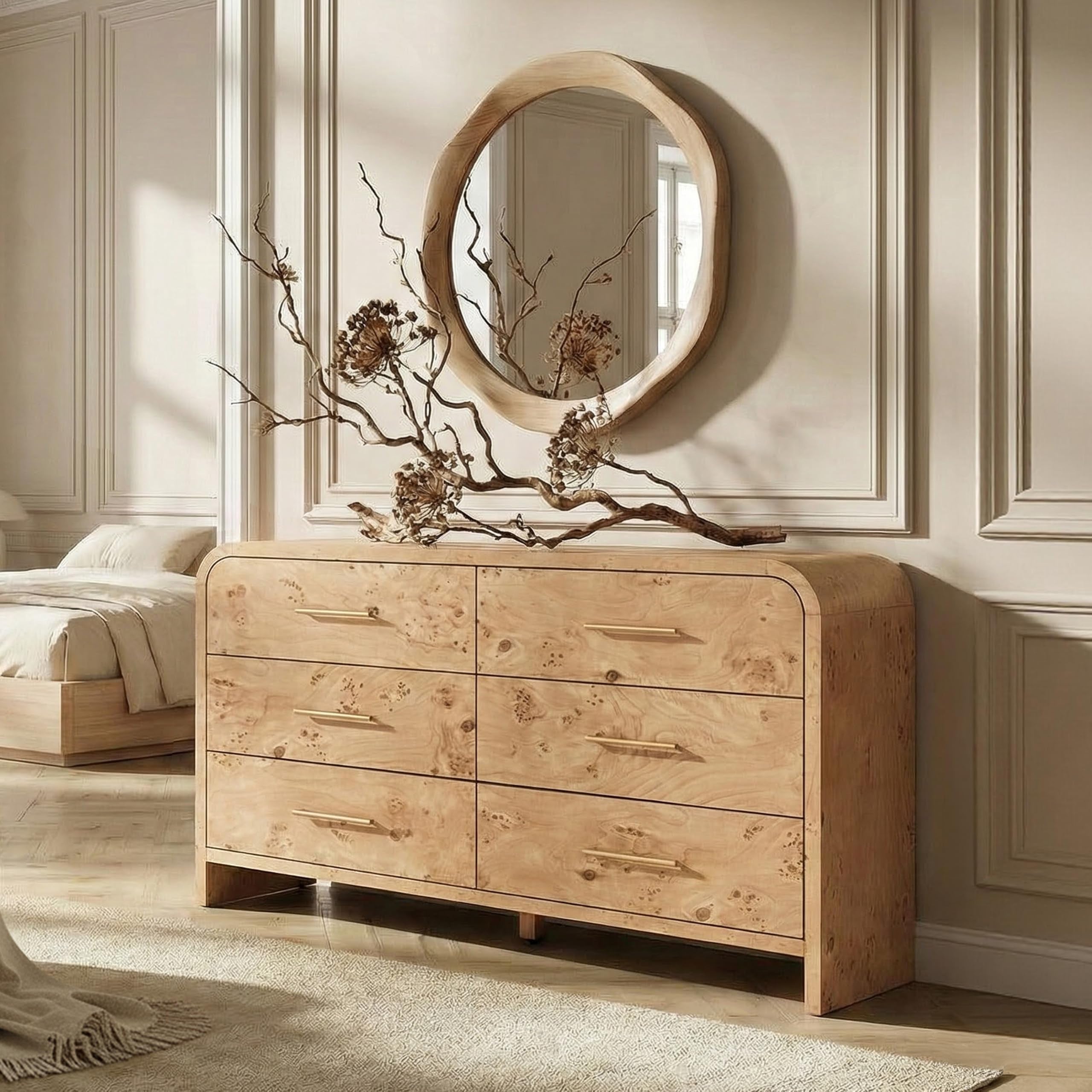
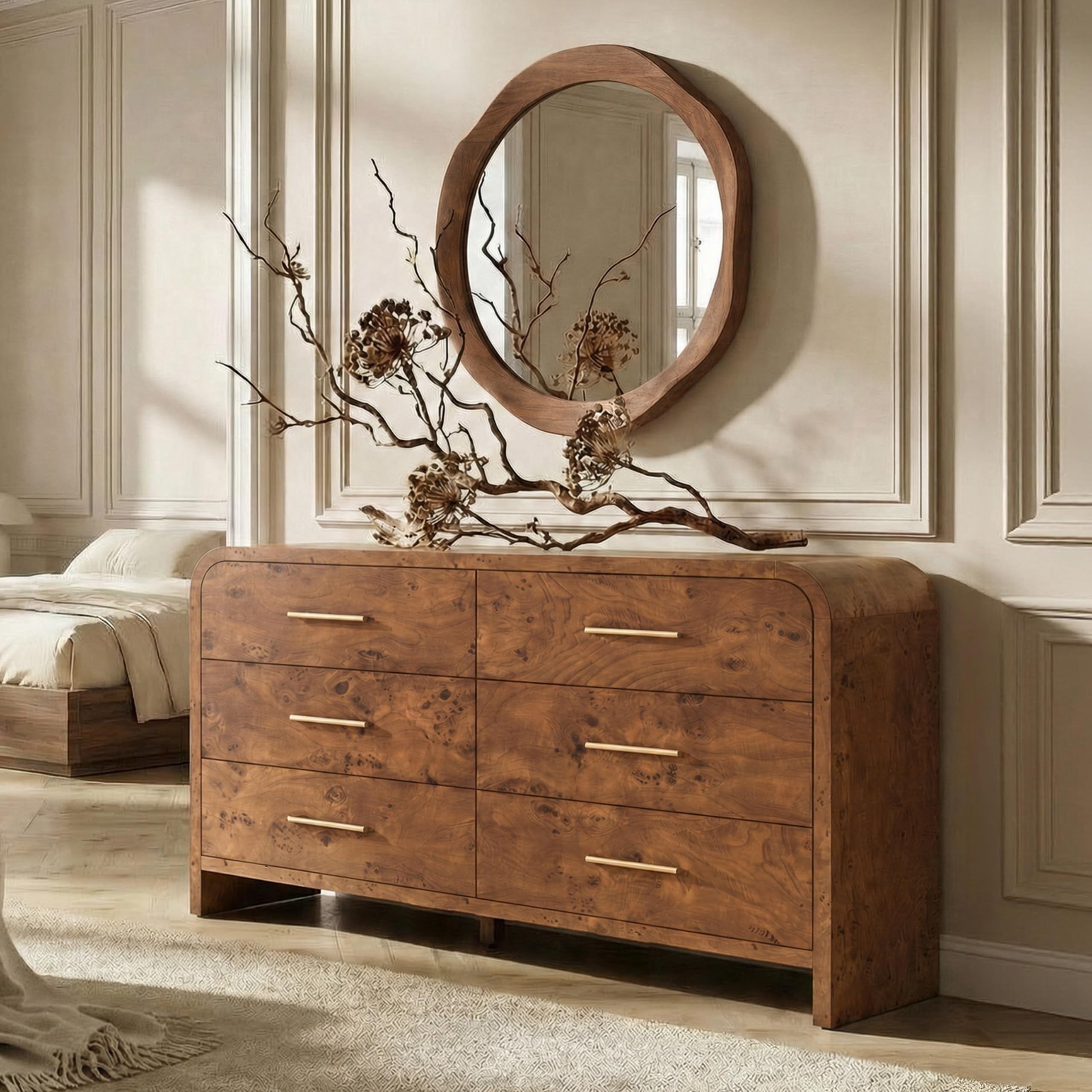


The same furniture shape can feel surprisingly different in two finishes. Light oak may bring to mind a sunlit bedroom with soft fabrics and relaxed mornings. Dark oak can give that same room a more grounded, intimate character.
Neither finish is automatically better. The difference lies in how the wood tone interacts with your walls, flooring, natural light, and the other furniture you already own.
When choosing between light oak and dark oak, think beyond which color looks attractive on its own. Consider the atmosphere you want your room to create.
Light Oak: An Airier, More Relaxed Feel
Light oak works particularly well when you want a room to feel open and easygoing. Its pale, natural-looking tones can complement warm whites, muted greens, beige textiles, and other understated colors.
This makes it a natural choice for bedrooms and living spaces where you want the furniture to feel present without dominating the room.
A light oak nightstand, dresser, or display cabinet can also work well alongside existing furniture in similar tones. You don't need every wood finish to match exactly; keeping the undertones compatible often creates a more natural result.
Light oak isn't limited to minimalist or Scandinavian interiors, either. Paired with patterned fabrics, darker accents, or more expressive decorative objects, it can provide a quieter foundation for a room with plenty of personality.
Dark Oak: Depth, Warmth, and a Stronger Presence
Dark oak brings a different kind of character. Its deeper brown tones can make furniture feel more substantial, creating a sense of depth that works especially well in rooms with layered colors and rich materials.
Imagine a dark oak dresser against a warm off-white wall, paired with linen bedding, a textured rug, and a simple bedside lamp. The contrast allows the furniture to stand out without making the room feel overly formal.
Dark oak can also help anchor a space filled with lighter furniture and accessories. Rather than trying to make every element feel equally prominent, one darker piece can give the room a clear visual focal point.
In smaller or dimly lit rooms, consider the furniture's overall size and placement. A large, dark piece may feel heavier than expected, while a smaller nightstand or accent cabinet can introduce depth more subtly.
Consider How Much Natural Light Your Room Gets
The amount of daylight in a room can influence how a wood finish looks throughout the day.
In a bedroom with limited natural light, light oak may help maintain a brighter overall appearance, especially when paired with lighter walls and bedding. Dark oak can still work beautifully, but thoughtful lighting and a balanced mix of colors become more important.
In a sun-filled room, either finish can work. Light oak can reinforce an airy atmosphere, while dark oak creates contrast against bright walls and illuminated textiles.
Before deciding, look at your room during the morning and evening. Wood tones can appear warmer, cooler, lighter, or deeper depending on the surrounding light.
If possible, compare product photos with your existing furniture and request finish samples when available.
Look at Your Existing Colors and Materials
Wood finishes rarely exist in isolation. They sit alongside flooring, wall colors, upholstery, metal hardware, and decorative objects.
For a light oak finish, consider combinations such as:
-
Warm white walls and natural linen
-
Beige upholstery and soft neutral rugs
-
Muted green accents and ceramic accessories
For dark oak, consider:
-
Cream or warm gray walls
-
Textured fabrics in caramel, taupe, or olive
-
Black metal details and understated decorative objects
These are starting points, not strict rules. Light oak can look striking against darker colors, and dark oak can feel soft when surrounded by warm neutrals.
The important detail is undertone. A warm wood finish may sit more comfortably with creamy whites and earthy colors than with very cool grays. Looking at the full palette together can help you avoid combinations that feel unintentionally disconnected.
Think About the Furniture's Shape, Too
Color isn't the only thing that determines a piece's presence in a room.
A light oak cabinet with a broad silhouette and heavy detailing may feel more substantial than a slim dark oak nightstand with simple lines. Likewise, curved edges, open bases, woven details, and visible wood grain can all change how a finish is perceived.
Consider both color and construction when choosing furniture from Cozyshome's Curved, Ripple, and Woven collections. The finish establishes one part of the mood, while the furniture's shape and material details contribute another.
This is particularly useful when introducing a new piece into an established room. A different wood tone can add variety, while a compatible silhouette helps the furniture feel connected to its surroundings.
Mixing Light and Dark Wood Can Work Beautifully
Choosing light oak doesn't mean every wooden piece in the room needs to be pale. The same applies to dark oak.
Mixing wood tones can make a room feel collected over time rather than purchased as a matching set. The trick is to give the combination some intention.
You might use a dark oak dresser as an anchor and introduce lighter wood through a nightstand or accent table. Alternatively, a light oak bed frame can sit comfortably alongside a darker display cabinet.
To bring the finishes together, look for a shared element: similar wood undertones, complementary shapes, or repeated materials elsewhere in the room.
If the contrast feels too strong, introduce a transitional tone through flooring, textiles, or smaller furniture pieces. You don't need to eliminate the difference; you just need to make it feel deliberate.
Choose the Mood You Want to Live With
Light oak often suits rooms that feel bright, relaxed, and understated. Dark oak can bring depth, contrast, and a more grounded character. Both can create a welcoming space when their finish, shape, and surroundings work together.
Before making a decision, consider your natural light, existing furniture, preferred color palette, and the role the new piece will play in the room.
At Cozyshome, we believe furniture should do more than fill a space. It should help shape how that space feels and how comfortably it fits into everyday life.
Choose light oak if you love an airy, natural atmosphere. Choose dark oak if you want more depth and presence. And if neither feels quite right on its own, don't be afraid to bring the two together.
👉 Explore the collection and enjoy a great deal: Woven Tall Cabinet

