
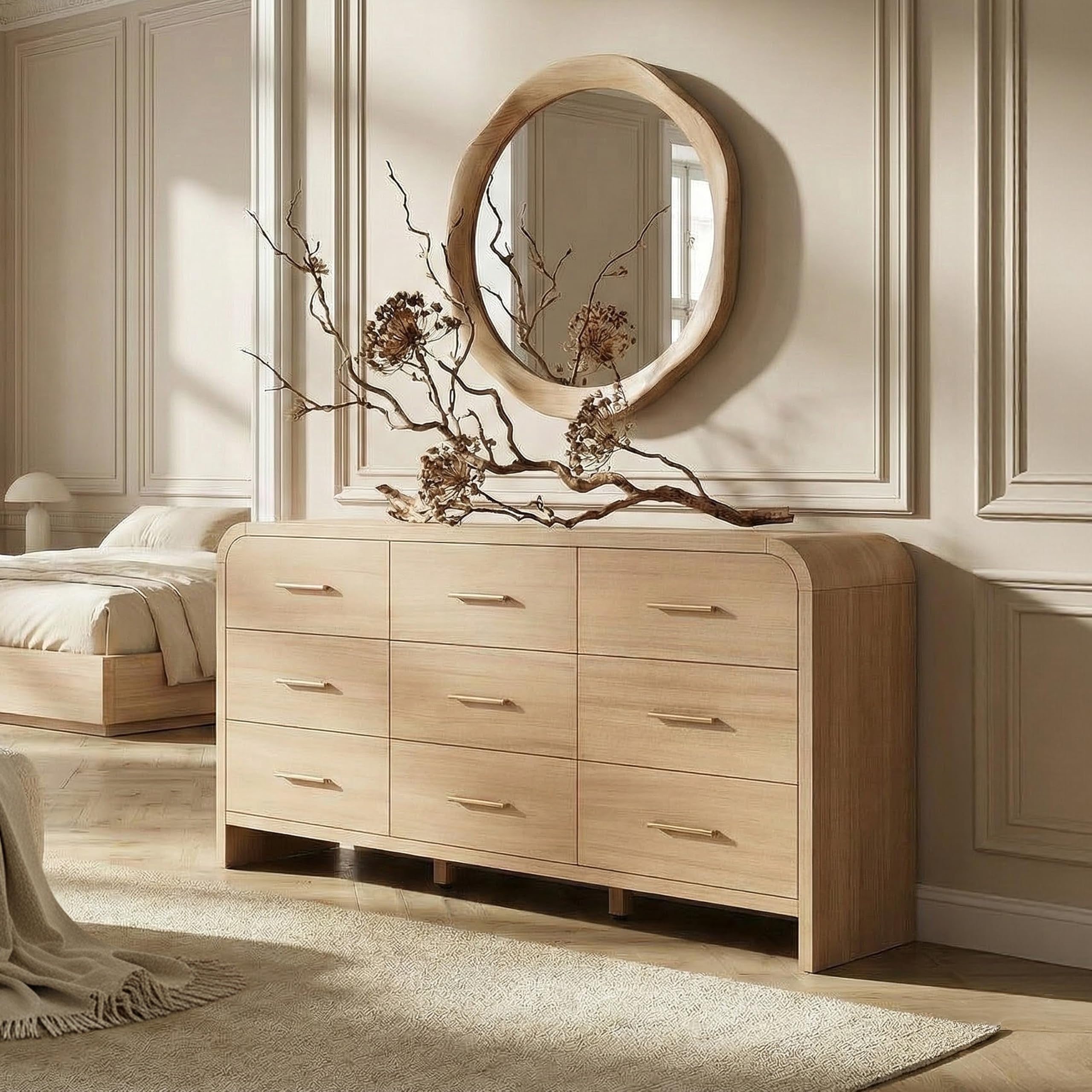
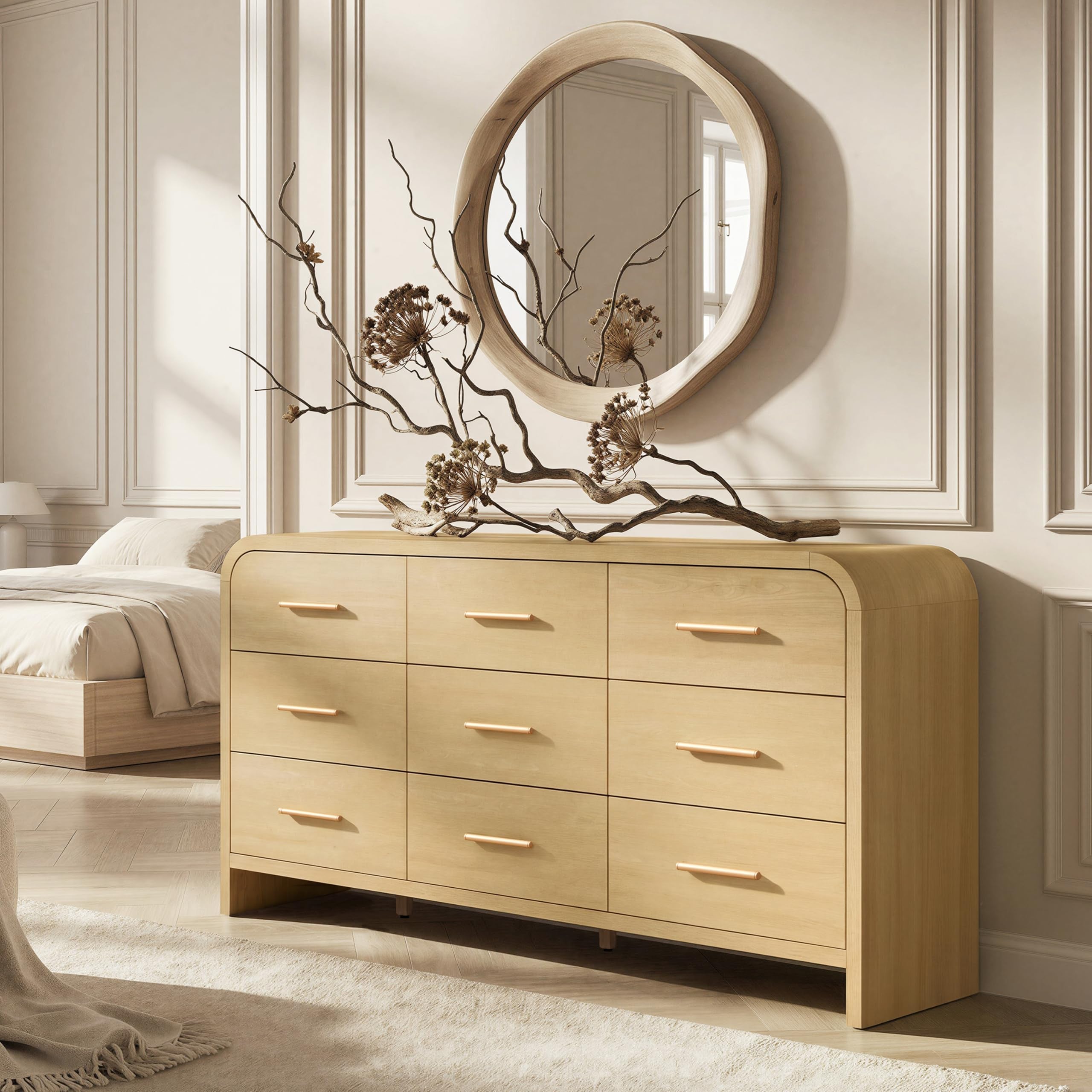
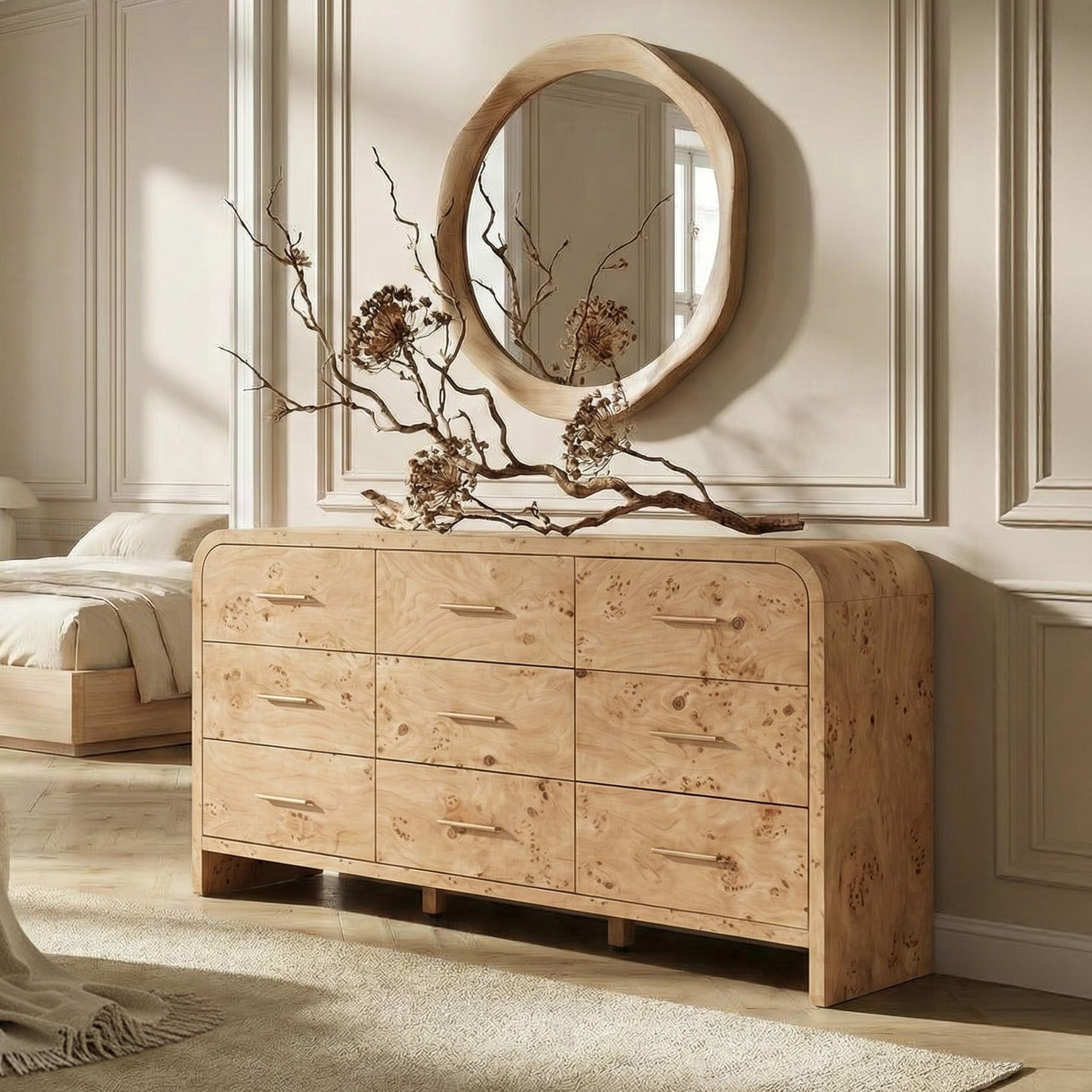
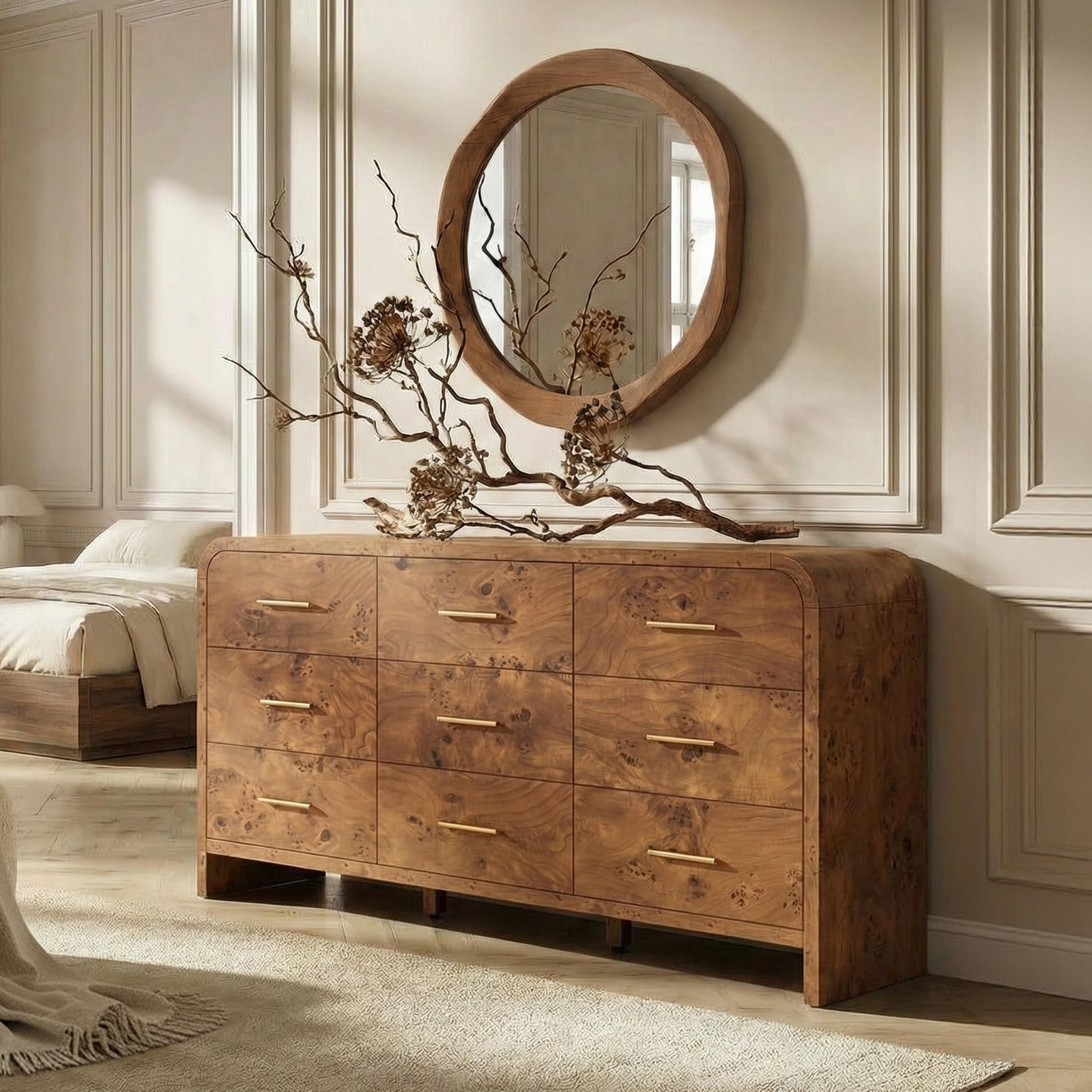
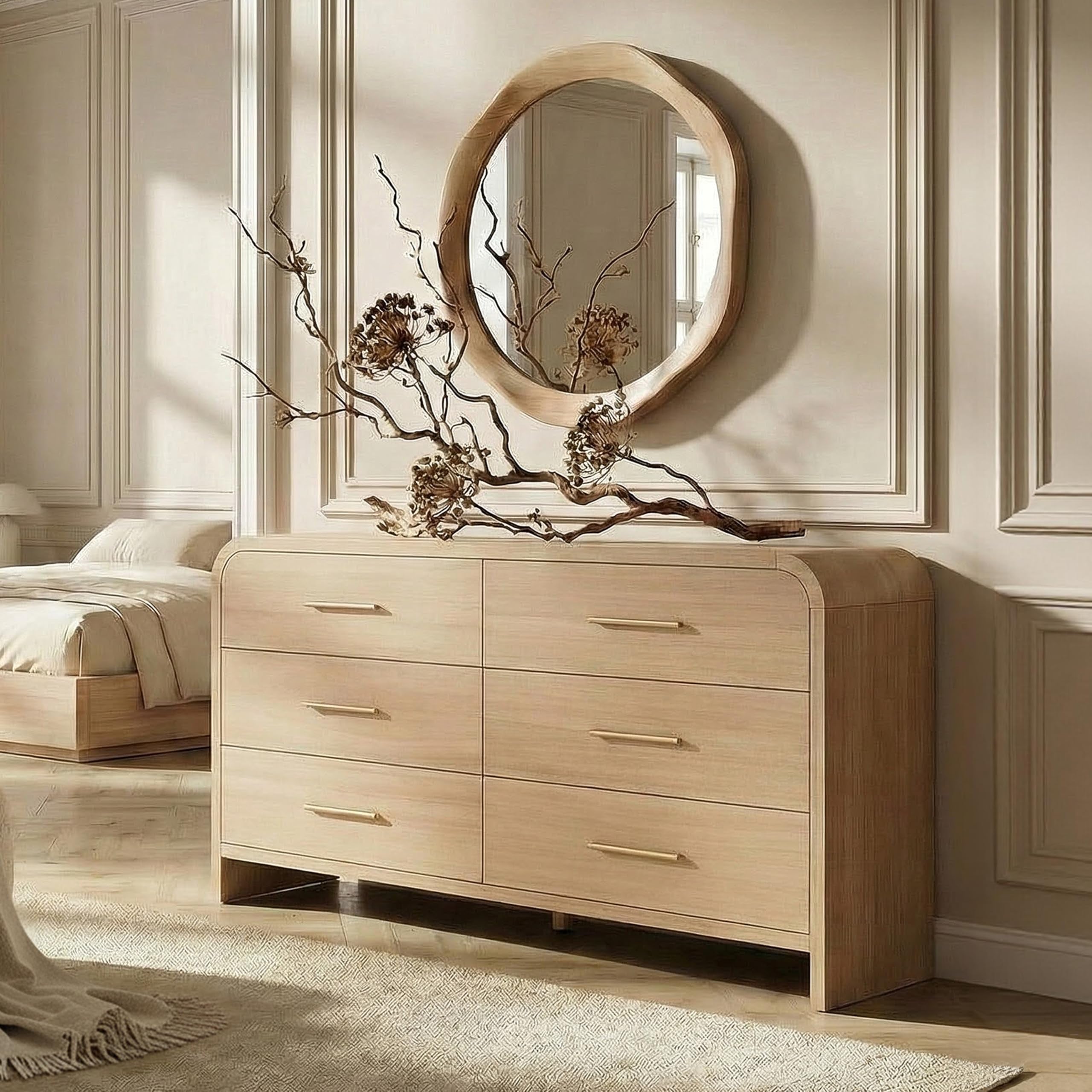
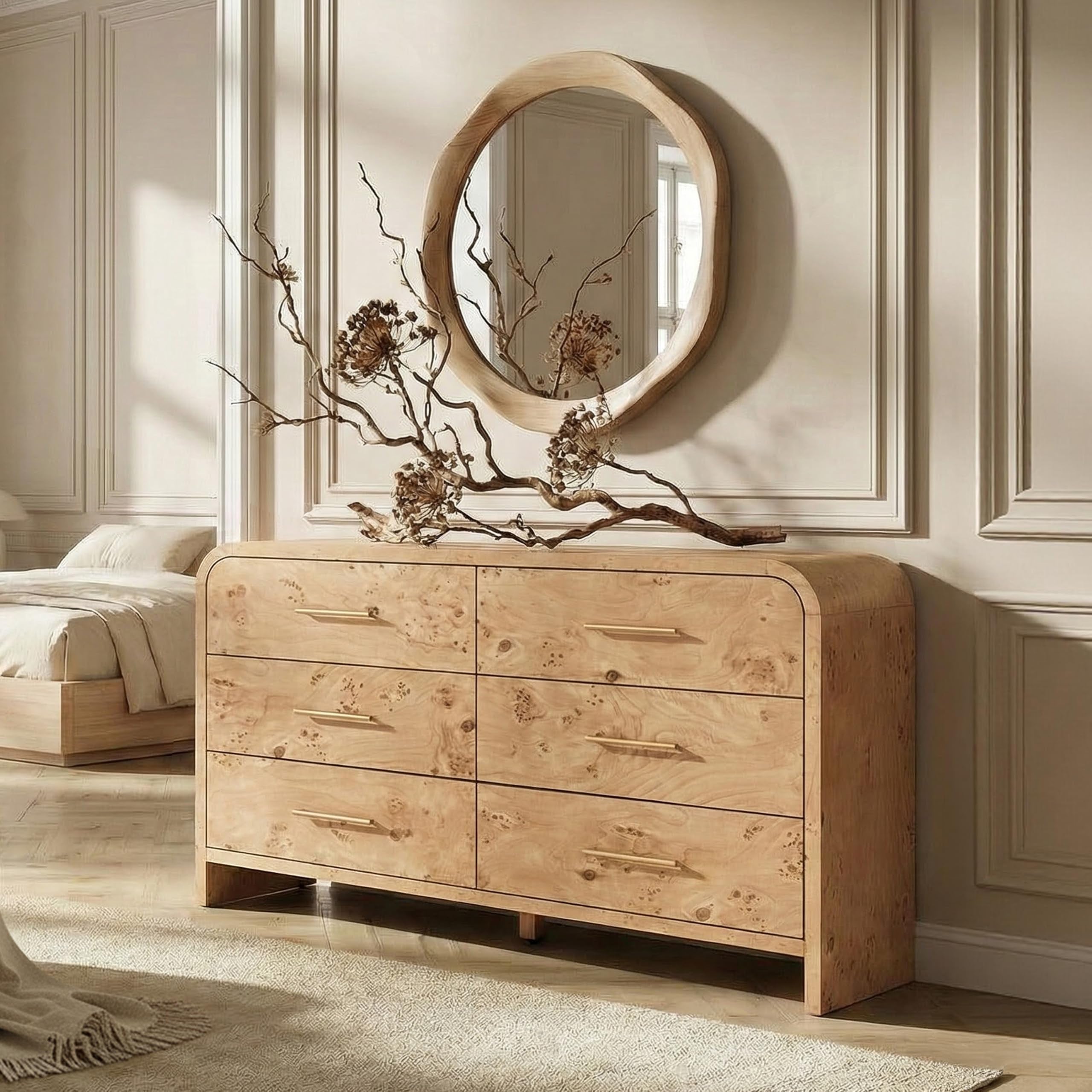
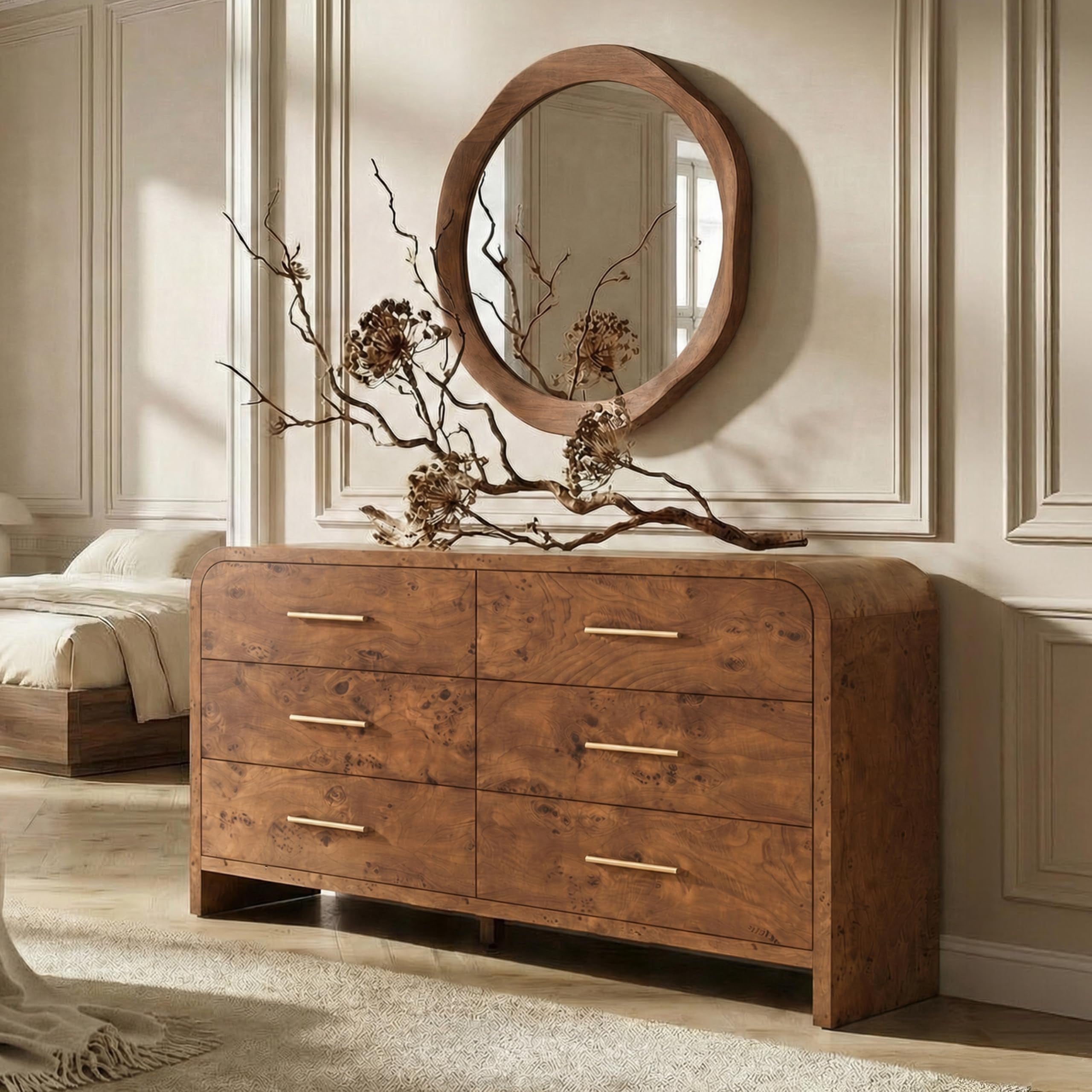


Mixing wood tones can make a space feel rich, layered, and more natural.
But it can also go wrong quickly. When too many tones compete, a room can start to feel chaotic instead of cohesive.
The key isn’t avoiding variety—it’s learning how to control it.
👉 Explore the collection and enjoy a great deal: Ripple 7-Drawer Dresser
Start With One Dominant Wood Tone
Every room needs a visual anchor.
Choose one primary wood tone to lead the space—usually the largest piece such as:
- bed frame
- dining table
- TV stand
- dresser
This becomes your “base” tone that everything else supports.
Limit Yourself to 2–3 Wood Tones
A common mistake is using too many variations.
In most spaces, two or three tones are enough:
- a dominant tone (main furniture)
- a secondary tone (smaller furniture or accents)
- an optional contrast tone (used sparingly)
This creates variety without visual overload.
Balance Light and Dark, Not Just Color
Instead of focusing only on matching undertones, think in terms of contrast.
For example:
- light oak + medium walnut
- natural wood + deep espresso
- warm beige wood + darker accent pieces
A good mix usually includes both light and dark elements to create depth.
Use Repetition to Create Harmony
Repetition helps different wood tones feel intentional.
You can repeat a tone in small ways:
- legs of chairs
- picture frames
- shelving details
- side tables
When a wood tone appears more than once, it feels like part of a system—not a mistake.
Let Texture Do Some of the Work
Wood grain and finish matter just as much as color.
A smooth modern finish can coexist well with a more textured, natural surface if the tones are balanced.
Mixing textures adds interest while still keeping the room grounded.
Don’t Match—Coordinate
A well-designed room doesn’t require perfect matching.
Instead of trying to make everything identical, aim for coordination:
- similar warmth levels
- complementary undertones
- consistent design style
This approach feels more natural and less “designed.”
Final Thoughts
Mixing wood tones is less about strict rules and more about balance.
When you choose a clear dominant tone, limit variation, and repeat materials thoughtfully, different woods can work together naturally without making the space feel busy.
The result is a room that feels layered, warm, and effortlessly cohesive.
Bring Nature Home
Explore our collection of natural wood furniture designed in a variety of tones and finishes to help you create balanced, harmonious interiors.
👉 Explore the collection and enjoy a great deal: Ripple 7-Drawer Dresser

