


You’ve probably walked into a living room before and thought:
“It feels expensive… but nothing here looks particularly expensive.”
That feeling is real—and it has less to do with price tags and more to do with how the space is put together.
In fact, many high-end looking living rooms aren’t filled with luxury furniture. They’re simply designed with a few quiet principles that most people overlook.
Let’s break them down.
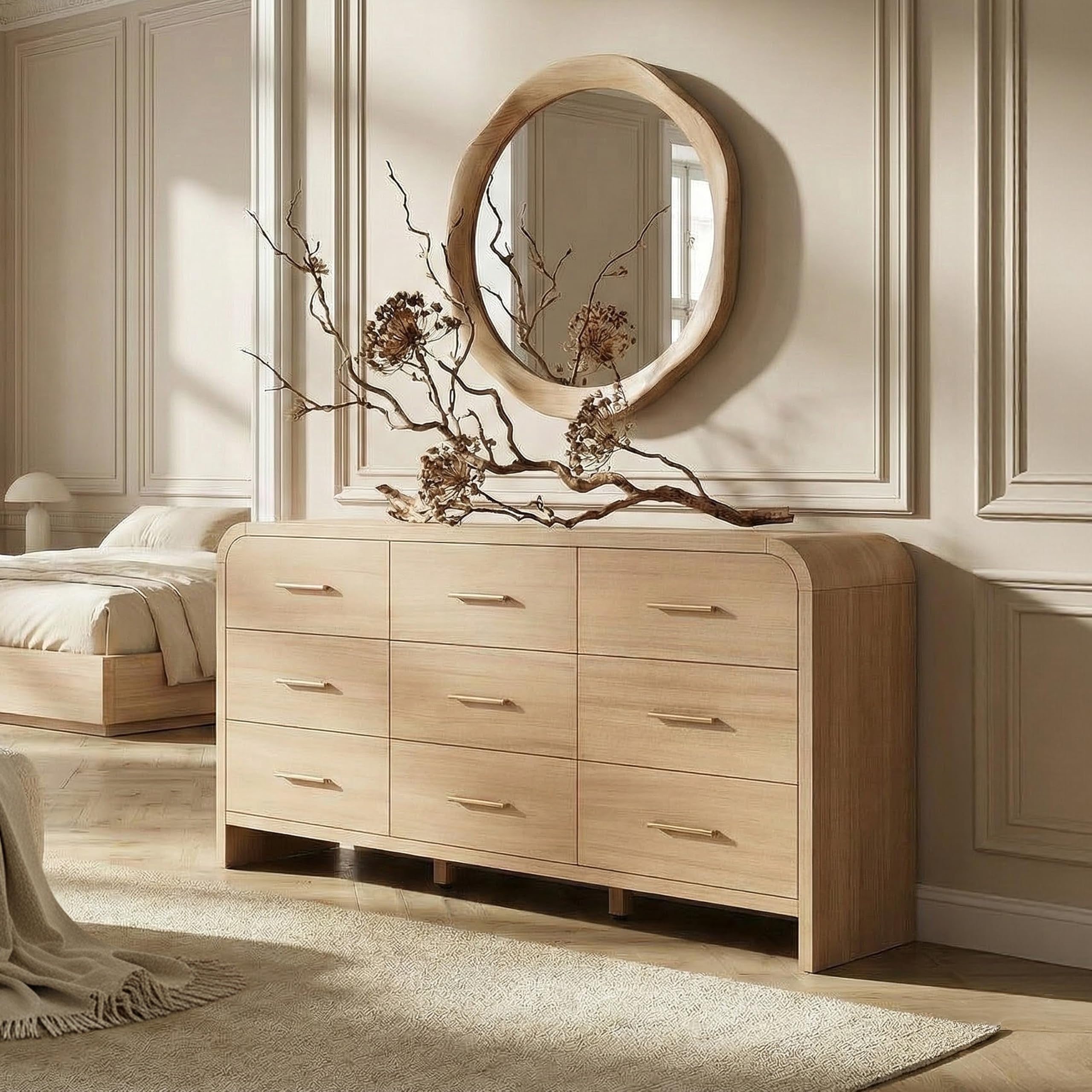
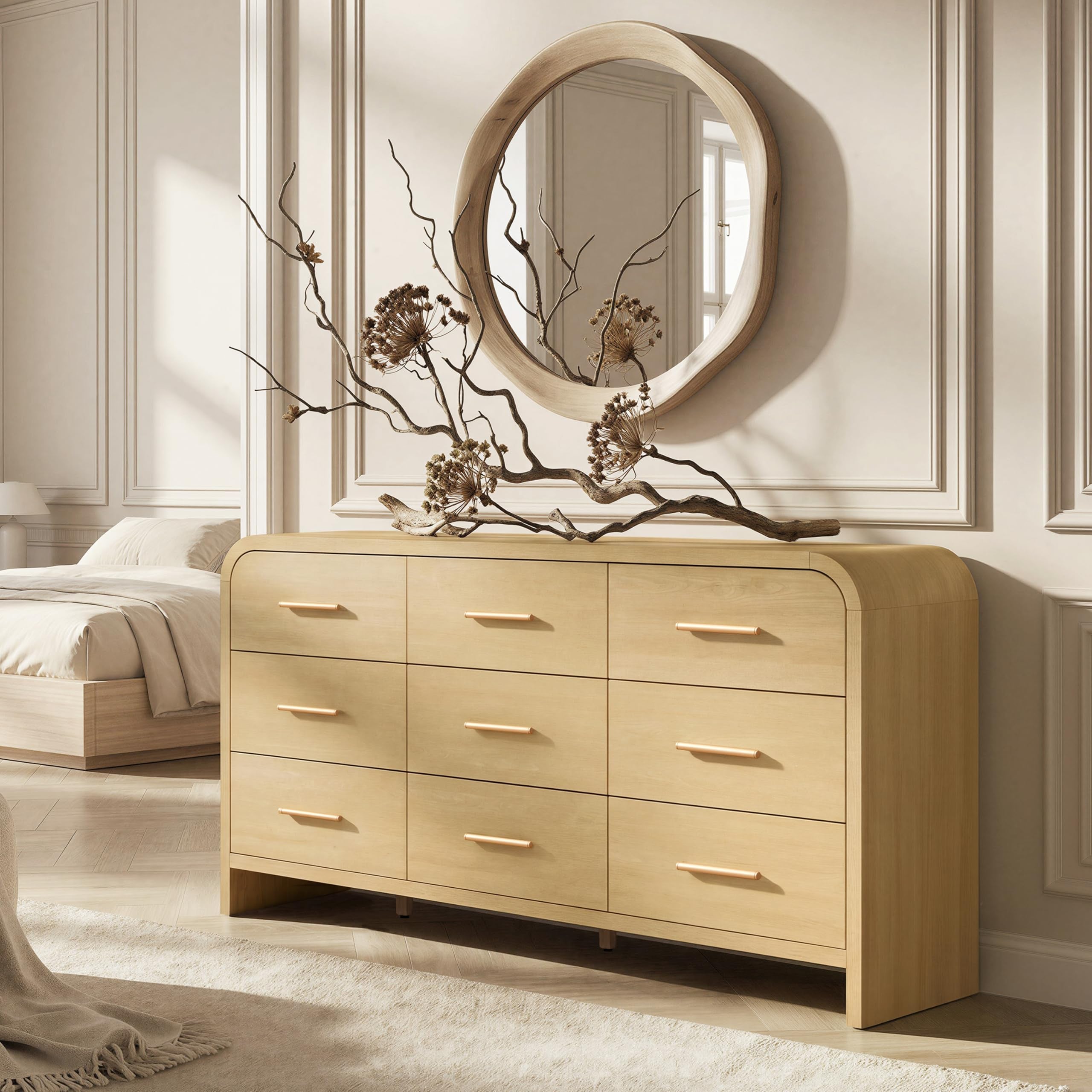
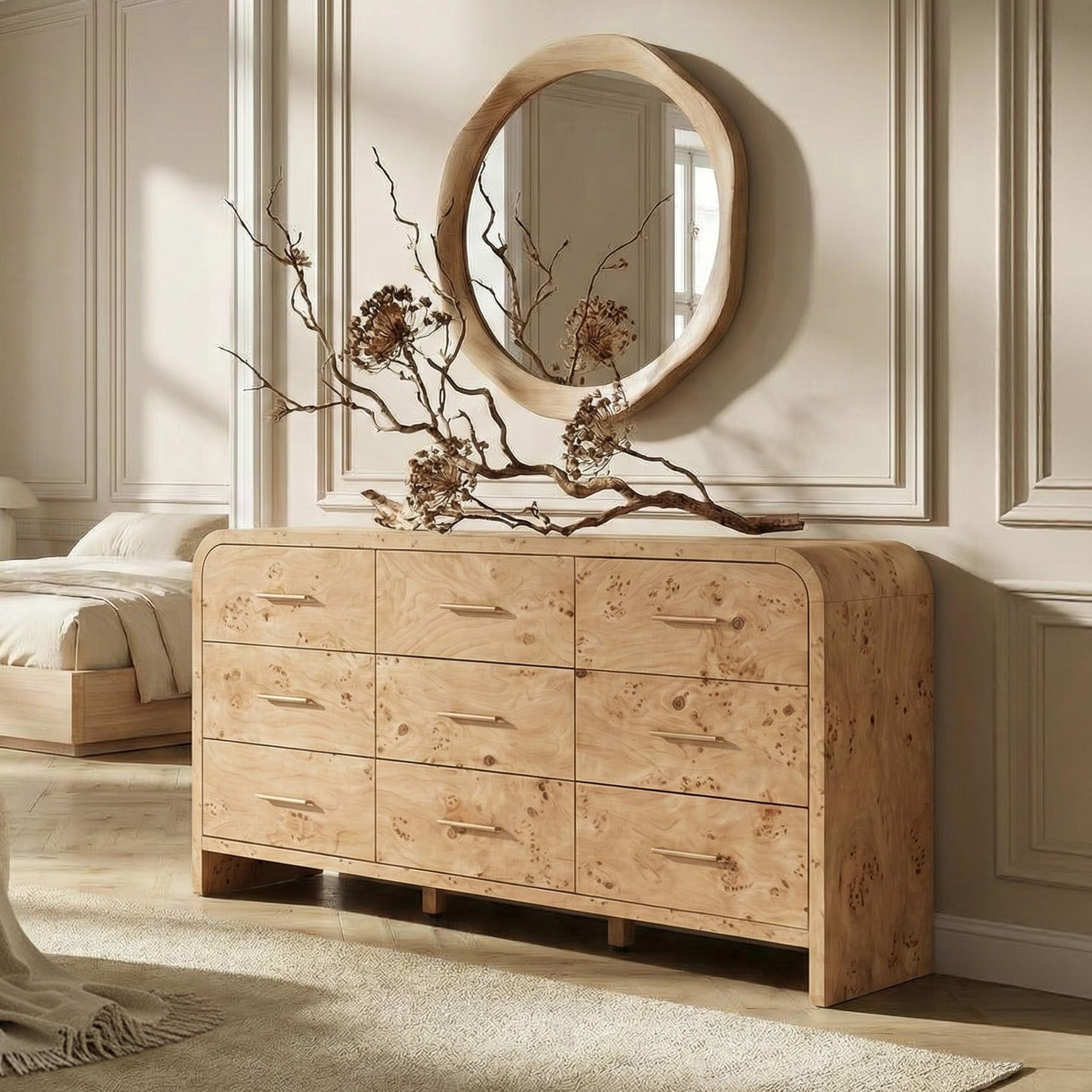
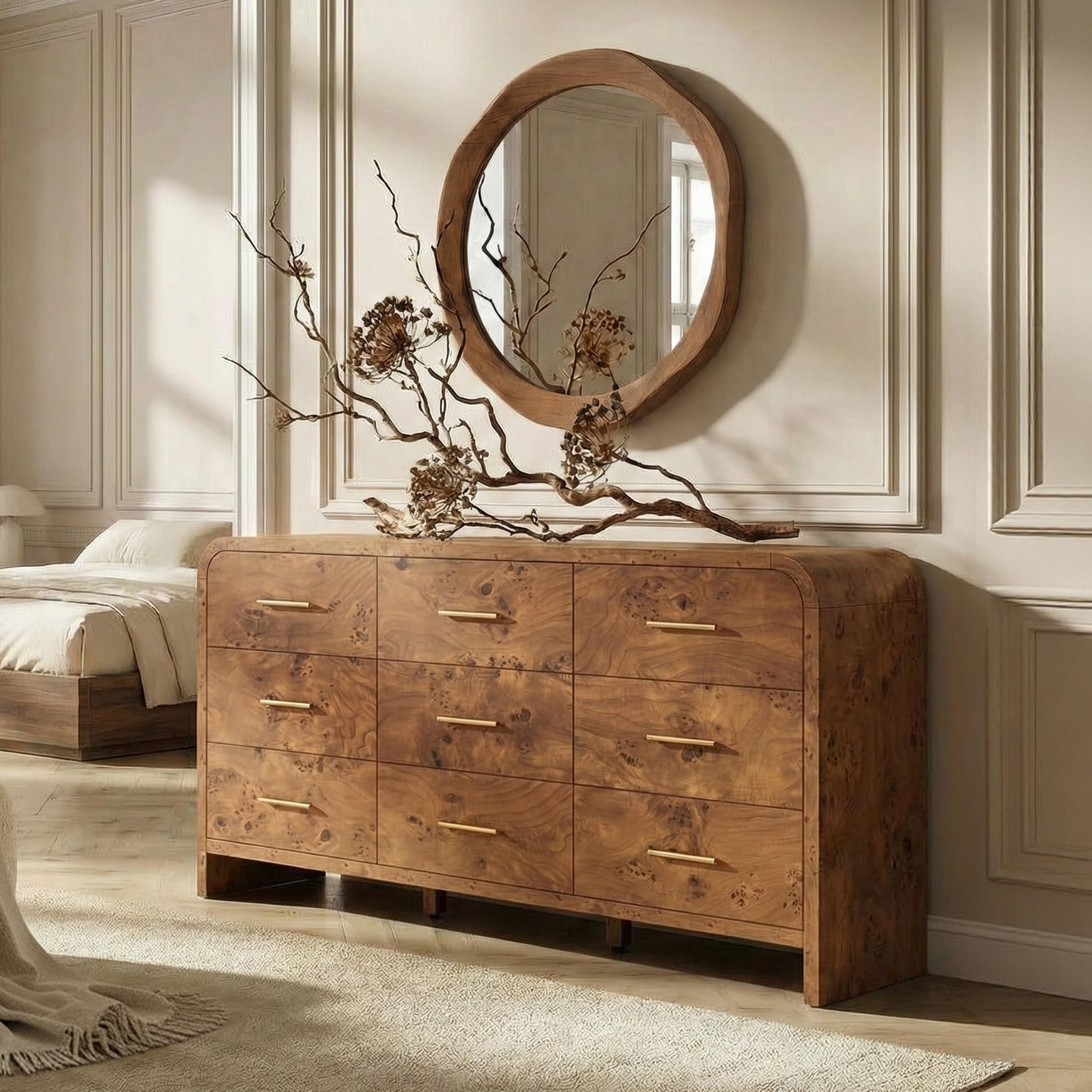
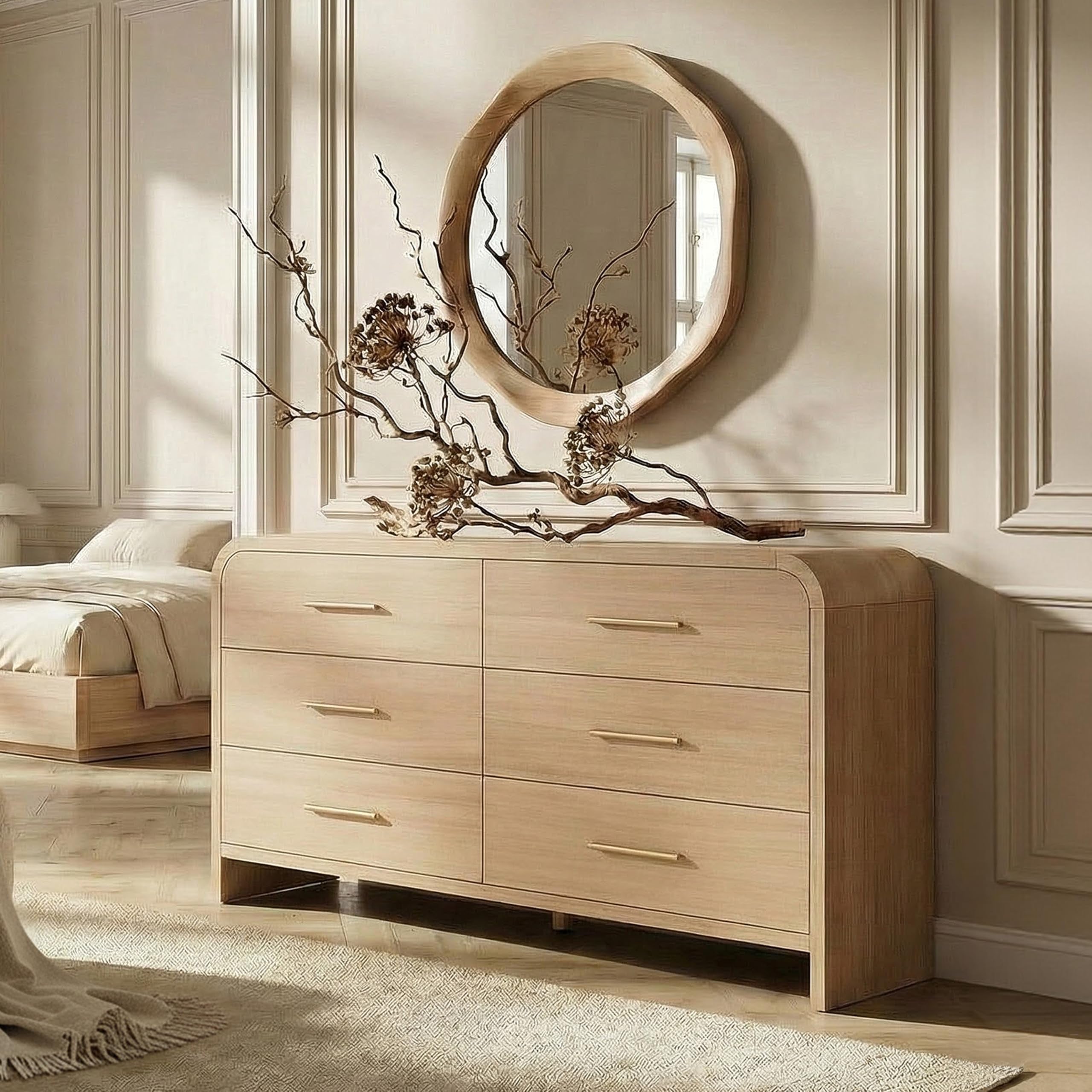
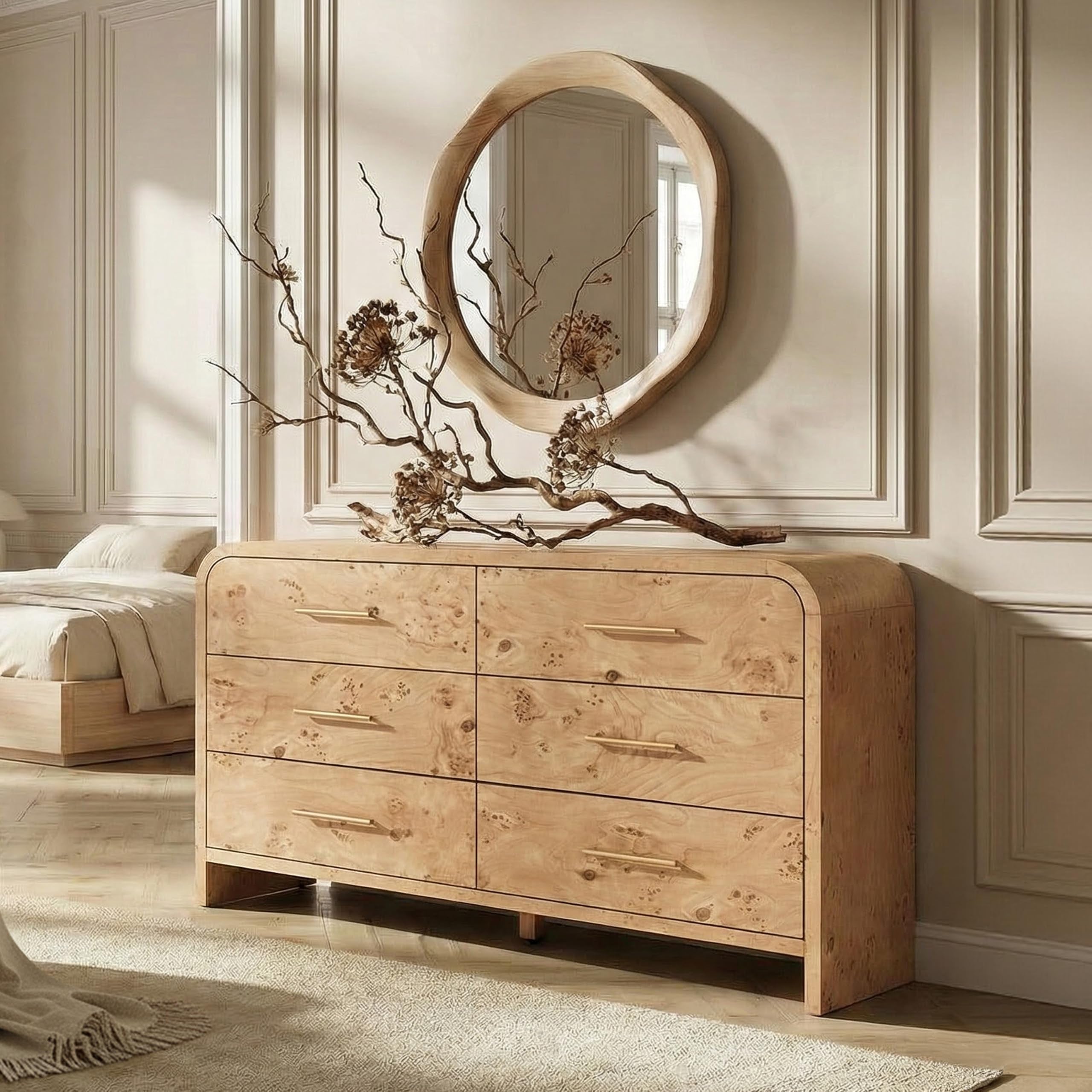
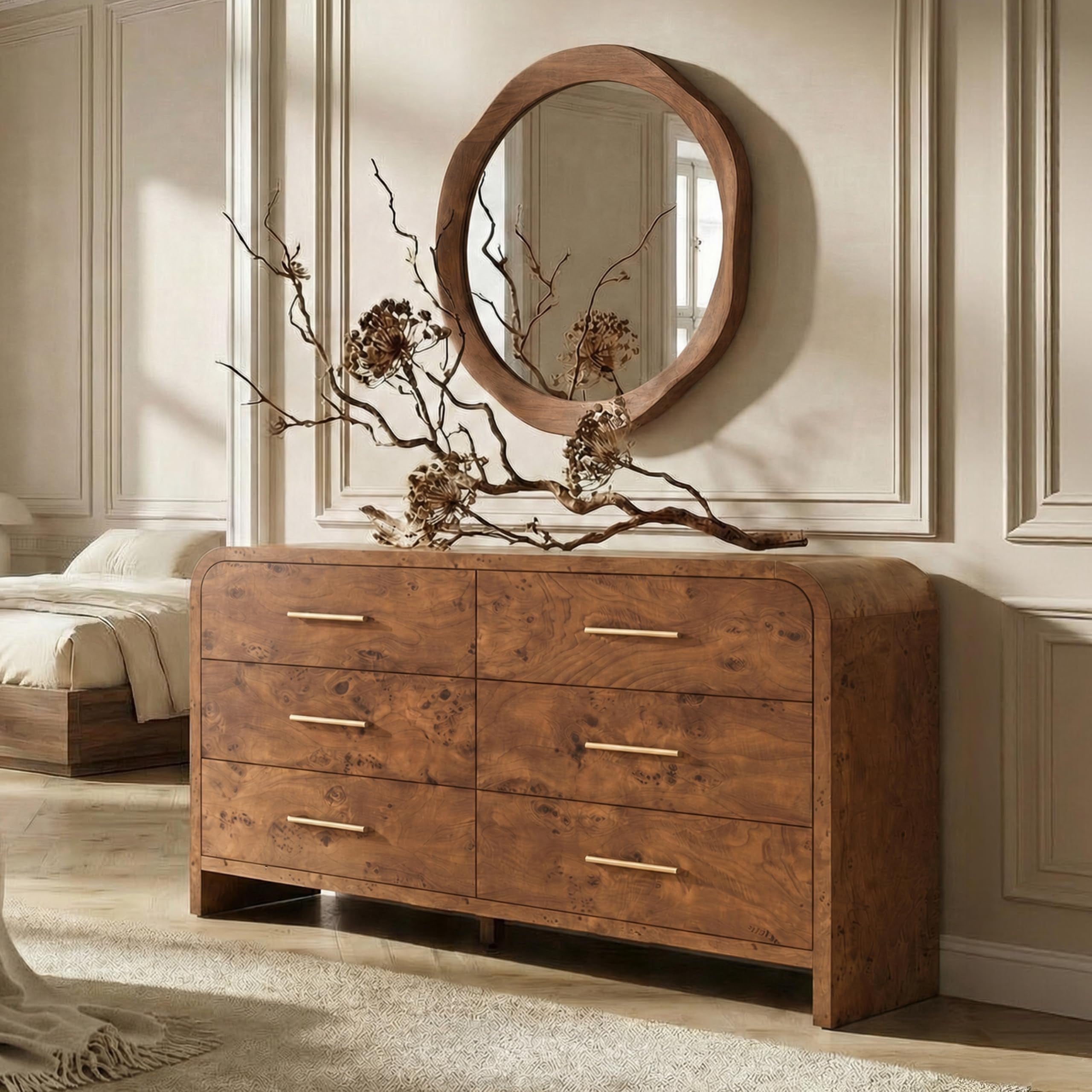
👉 Explore living room furniture options: Curved 6-Drawer Dresser
1. Less Visual Noise, More Breathing Space
The biggest difference between a “messy” room and an “expensive-looking” one is often clutter control.
High-end spaces usually have:
- fewer visible objects
- clean surfaces
- intentional empty space
This doesn’t mean the room is empty. It means every item has a purpose, and nothing is fighting for attention.
A simple TV stand with minimal styling can often feel more premium than a crowded one filled with decor.
2. Consistency in Materials and Colors
Expensive-looking rooms rarely use too many competing materials.
Instead, they stick to:
- 1–2 dominant wood tones
- a small, consistent color palette
- repeated textures (wood, fabric, metal in balance)
For example, a wooden TV stand, matching sideboard, and coordinated dresser can instantly make a space feel more cohesive—even if each piece is affordable.
Consistency creates calm. And calm often feels premium.
3. Furniture That Fits the Space Properly
One of the most overlooked design factors is scale.
A room feels expensive when furniture is:
- not too large for the space
- not too small to feel accidental
- properly aligned with wall and floor proportions
Even budget furniture can look high-end if it fits the room correctly.
On the other hand, oversized or mismatched pieces can make even expensive items feel awkward.
4. Lighting That Creates Layers, Not Just Brightness
Lighting plays a bigger role than most people realize.
High-end living rooms usually don’t rely on one ceiling light. Instead, they use layers:
- ambient lighting (soft overall glow)
- accent lighting (lamps, indirect light)
- decorative lighting (small visual highlights)
This creates depth and warmth, making the room feel more designed and less “flat.”
5. Functional Furniture That Reduces Clutter
Clutter is one of the fastest ways to make a room feel cheaper.
That’s why well-designed storage furniture is so important:
- TV stands with hidden compartments
- sideboards that store daily items
- dressers that keep surfaces clean
When everyday objects are hidden away, the room instantly feels more refined.
It’s not about having less—it’s about seeing less.
6. Repetition Creates Design Rhythm
Another subtle trick used in well-designed living rooms is repetition.
This could be:
- repeating wood tones across furniture
- matching cabinet lines or shapes
- consistent hardware finishes
Repetition creates visual rhythm, which helps the space feel intentional rather than random.
Even simple furniture looks more “designed” when it feels connected.
7. A Few Well-Chosen Details Beat Many Small Ones
Instead of filling a room with decorations, high-end spaces usually rely on a few strong visual elements:
- one framed artwork
- one plant
- one sculptural object
- one focal furniture piece
This approach avoids visual overload and allows each item to stand out.
Less, but more meaningful.
Final Thoughts
A living room doesn’t feel expensive because of how much was spent.
It feels expensive because of how clearly it was designed.
When clutter is reduced, colors are consistent, furniture fits properly, and storage is used wisely, even simple pieces can create a high-end atmosphere.
It’s not about luxury furniture.
It’s about thoughtful choices.
👉 Explore living room furniture options: Curved 6-Drawer Dresser

